
The Energy Blind Spot in Mining Operations – and What It's Costing You
Published by Kristian Ilasko,
Digital Content Coordinator
Global Mining Review,
Explore how mining operators can improve energy visibility, reduce cost per tonne, and build a credible decarbonisation path – in Yokogawa's new eBook, Beyond Compliance: Lower Operating Costs Through Energy Efficiency.
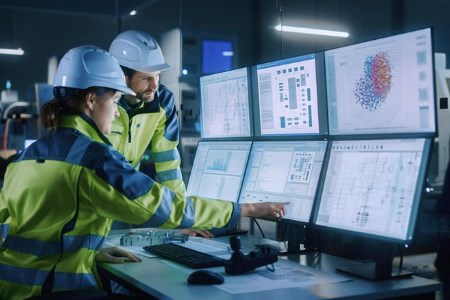
Energy is one of the largest operating costs in mining, and it is often managed as a monthly number rather than an operational variable. Electricity and fuel can represent a material share of site operating cost, with the exact mix varying widely by commodity, mining method, and site power model. Across comminution, pumping and dewatering, ventilation, and utilities, many operations still struggle to pinpoint where energy is being consumed, what is driving avoidable loss, and which interventions will deliver sustained savings.
Most sites already generate energy data. The issue is practical: the data is fragmented and arrives too late to influence decisions on the shift. Crushing and grinding performance is reviewed in one place, ventilation in another, dewatering somewhere else, and utilities somewhere else again. By the time the picture is stitched together, the operating window has passed.
This is the core argument in Yokogawa’s eBook, Beyond Compliance: Lower Operating Costs Through Energy Efficiency. Written for energy-intensive industries, its message translates directly to mining: energy efficiency creates operational value when it is built into how a site runs day to day, not just how it reports.
In mining, the energy opportunity is distributed across the process chain:
- Comminution (crushing and grinding) is a major electrical load for many concentrators. Small improvements in throughput stability and specific energy (kWh/t) compound at production scale.
- Pumping and dewatering, especially in underground operations, is often the next large lever. Duty points drift as pumps wear, lines partially block, and operating modes change. Power draw rises before downtime appears.
- Ventilation can also be a large load underground, particularly where fan demand is not aligned tightly to occupancy and activity state.
Better energy performance starts to show up when sites can see energy intensity (kWh/t) by circuit and operating mode, and when energy signals are linked to production state. That enables earlier interventions: control changes, setpoint correction, maintenance prioritisation, and operating adjustments that reduce cost per tonne without destabilising production.
Ore to Opportunity: Advancing Intelligent Mining
The European context accelerates the need for this discipline. Energy price exposure is high, reporting expectations are rising, and many operations face carbon-cost pressure indirectly through electricity pricing, customer procurement screens, and supply-chain scrutiny. At the same time, electrification and hybrid power configurations add complexity to site energy management. The integration of grid power, diesel generation, solar, and battery storage introduces new stability and peak-demand challenges unless visibility and control keep pace.
For European mining operations, a practical energy efficiency framework centres on:
- Improved visibility into energy intensity (kWh/t) by circuit and operating mode.
- Earlier identification of abnormal energy use (degraded pumps, blocked lines, sub-optimal setpoints, drifting duty points).
- Clearer connection between site actions and enterprise energy/emissions reporting.
- A pathway to lower operating cost that avoids major disruption to production and can be staged as confidence builds.
Energy optimisation is also a low-disruption entry point into decarbonisation. Before large electrification programmes are approved and before capital-intensive infrastructure changes are committed, most sites have measurable efficiency potential locked in existing assets. Recovering that potential improves cost per tonne and builds the data foundation for whatever decarbonisation pathway comes next.
The immediate opportunity is straightforward: improve visibility, connect energy signals to operating reality, and tighten day-to-day control of the largest loads.
Download Yokogawa's eBook, Beyond Compliance: Lower Operating Costs Through Energy Efficiency, for a practical framework on improving energy performance in mining, from comminution to utilities, without major capital outlay
Read the article online at: https://www.globalminingreview.com/special-reports/05052026/the-energy-blind-spot-in-mining-operations-and-what-its-costing-you/
You might also like

Global mining leaders arrive in Perth as GRX26 kicks off a week of international collaboration and innovation
Perth is at the centre of global mining innovation this week, with international delegations, major mining companies, and technology leaders arriving for the Global Resources Innovation Expo 2026 (GRX26), hosted by leading peak bodies Austmine and AusIMM.