
BHP unveils five-year US$400m climate investment plan
BHP’s Chief Executive Andrew Mackenzie has unveiled a five-year, US$400 million climate investment program, with a commitment to reduce Scope 1, 2 and 3 emissions.

BHP’s Chief Executive Andrew Mackenzie has unveiled a five-year, US$400 million climate investment program, with a commitment to reduce Scope 1, 2 and 3 emissions.
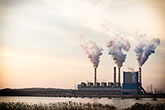
BHP will develop technologies to reduce emissions from its own operations, as well as those generated from the use of its resources.

Metso has introduced its new approach for tailings management in mining with the launch of the VPX filter.
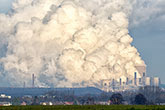
In order to be compliant with the latest emission regulations Epiroc is replacing the engines on a number of surface drill rigs produced in the EU.
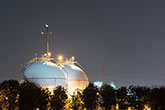
The mine will use EVOL LNG to fuel Zenith Energy’s 14.5 MW power plant, with supply planned to commence from September 2019.

Rio Tinto has now provided additional information about the construction, management and monitoring of facilities, including independent reviews.
The review will be divided into three phases: conducting research, broad consultations and developing an international standard.

Denison Mines Corp. has begun its Environmental Impact Assessment (EIA) process at the Wheeler River Project in northern Saskatchewan (Canada).

Umicore and Glencore have entered into a long-term agreement where Glencore will provide a sustainable supply of cobalt for Umicore’s battery materials.

The Director-President of the foundation set up by Anglo-Australian mining corporation BHP to compensate victims of one of Brazil’s worst ever environmental disaster has been indicted on fraud charges.


This is a positive step towards construction of the Carmichael mine and rail project.
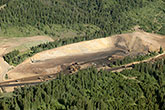
The World Bank has launched its new climate-smart mining facility with initial support from Rio Tinto, Anglo American, and the German government.
The Mosaic Company, a Brazilian fertilizer maker, has said that it will suspend production at its phosphate mines of Tapira and Catalão.

MCA analysis shows that without carry over units, the financial cost to Australia will be at least AUS$12.8 billion.

Earlier this week, ELYSIS announced it was setting up a research centre in the Saguenay-Lac-Saint-Jean region in Québec concentrating on the commercialisation of a breakthrough technology that eliminates all direct greenhouse gases from the traditional aluminium smelting process by 2024.