
How mining can improve capital delivery and predictability
Published by Will Owen,
Editor
Global Mining Review,
Darryn Quayle, Vice President, Resources, Worley, considers how trust in mining capital delivery can be rebuilt by strengthening front-end definition, leveraging technology, and committing to disciplined execution.
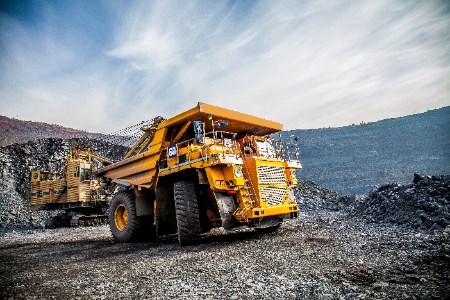
Restoring confidence in capital delivery is one of the mining industry’s most urgent priorities. As demand for critical minerals accelerates, the sector must demonstrate that it can consistently deliver complex projects on time and to budget. Yet according to a McKinsey analysis of global mining and metals projects, more than 80% of mining projects experience material cost or schedule overruns, with average cost growth at around 40%. When an industry repeatedly fails to deliver capital projects as planned, confidence erodes, which in turn has direct consequences for capital access, investment decisions and project sanctioning. EY’s 2025 Top 10 risks and opportunities for mining and metals companies ranked capital as the number one risk facing the sector, reflecting heightened investor scrutiny on how capital is deployed in a sector marked by persistent cost overruns.
The implications extend well beyond mining itself. With demand for critical minerals rising due to the energy transition, digital infrastructure, and advanced manufacturing, mining is under pressure to deliver more, faster, and more efficiently. Yet developing new mines and expanding existing operations is becoming harder and slower, with projects taking 16 – 20 years from discovery to first production. Sequential decision making, under resourced front-end studies and siloed roles across owners, engineers, OEMs, and contractors all slow project development. Permitting and regulatory requirements are also often considered too late in the process, pushing new supply further out and driving costs higher at a time when society cannot wait decades for critical materials to reach the market.
This should be the industry’s moment in the sun. Realising this opportunity requires the sector to restore trust in capital delivery; by reducing volatility and consistently delivering enhanced, enduring value for communities, host environments, and shareholders. The good news is that the tools to rebuild confidence already exist. In the recent past, mining projects were widely regarded as relatively safe investments, with many delivered ahead of schedule and, in some cases, under budget. Looking back highlights a set of practices worth adopting again: proven fundamentals the industry has gradually moved away from, alongside ways of working that align naturally with today’s technologies and allow them to be applied more effectively.
Controlling complexity
One of the most cited explanations for mining’s capital efficiency challenges is rising project complexity and, to an extent, this is true. In EY’s 2026 risk outlook, operational complexity was identified as the leading risk facing the mining sector, driven by deeper and lower grade deposits, aging assets, and increasingly unpredictable and severe weather. However, mining has always been a complex industry, with a long history of delivering large, technically demanding projects in remote and challenging environments.
A more complete explanation for today’s outcomes lies in a set of behaviours that have gradually taken hold. Chief among these is that projects often proceed to final investment decision (FID) with known gaps in ore body understanding, operating assumptions, and scope maturity, with risks acknowledged but not always fully incorporated in decision-making. Too often, experience and lessons learned from prior projects, both successes and failures, are not systematically applied, leading to repeated exposure to predictable risks.
Effective front-end definition enables informed, risk-adjusted decision-making by bringing geology, mine planning, processing, materials handling, infrastructure, ESG, and execution considerations together early. This integrated view allows teams to explicitly surface uncertainties, test assumptions, and draw on organisational experience to distinguish between risks that are acceptable, risks that can be mitigated, and risks that should fundamentally reshape the project. In doing so, projects can be deliberately shaped around the highest-value and most deliverable outcomes before capital is committed.
Progressing with intent
Clear stage-gates then function as decision points that lock in scopes and value. When the information required at each gate is defined upfront and decisions are upheld, scope creep is reduced and projects progress with greater clarity on where value is being created. Where uncertainty cannot be removed, it can be explicitly recognised and reflected in the investment case on an informed, risk assessed basis.
This return to fundamentals comes at a moment of genuine technological opportunity for mining. Proven and emerging tools now enable far more rigorous scenario testing, faster learning, and better-informed decisions at the front end, allowing value to be intentionally shaped and captured early.
Use it or lose it
For example, autonomous and remotely operated equipment, advanced digital design and simulation tools or integrated operating systems offer significant opportunity for capital efficiency, allowing projects to revisit fundamental assumptions around layout, tolerances, access, and material movement. In practice, however, these technologies are rarely used to their full potential.
Early studies and FID cases often default to traditional operating models, with new technologies treated as optional enhancements rather than core assumptions. Teams are asked to carry both the legacy and future operating cases in parallel. The conservative case then anchors design decisions, locking in layouts, infrastructure and safety systems that prevent projects from defining a more minimum viable project pathway and fully capturing the efficiencies enabled by automation or remote operations.
Autonomous haulage, for example, can operate with far tighter and more consistent tolerances than human-operated fleets. In theory, this enables narrower haul roads, different traffic management rules, simplified intersections and materially reduced earthworks and infrastructure scope. In practice, many projects continue to design to human driving tolerances ‘just in case’. The result is that the true benefits of automation are diluted.
Regardless of the specific technologies deployed, commitment to a clearly articulated business objective and early definition of the preferred delivery model underpins project success. Projects that define their delivery model early and engage in a systematic and well programmed engagement and activation of the project’s ecosystem and complex supply chain tend to experience less impact from late or unexpected changes in the delivery of the project. The advantage lies less in any single technology than in the clarity of the delivery approach, the willingness to adhere to it and the early engagement of key partners in successfully delivering it, rather than revisiting fundamental decisions midstream.
A collective opportunity
That type of consistency must come from all stakeholders in a project. Outcomes depend on owners, engineers, contractors, operators, technology providers, and capital providers locking in the right delivery and operating model and then adhering to those decisions through execution. That requires these parties to trust one another: trust the early work, trust the plan it produces, and trust the delivery of that plan.
Conversations we’ve recently had with industry leaders have consistently highlighted under-resourced concept stages, inadequate early understanding of geology, poor integration across technical, ESG, and community inputs and a lack of clarity around what constitutes ‘sufficient’ information to make and hold decisions. These conversations underscore the extent to which gaps in early project definition continue to flow through into execution, driving rework, volatility, and loss of confidence in capital outcomes. The study phases where optionality and definitions are narrowed can vary depending on the project complexity, though what remains is that once FID is reached the plan clarity should be ready for execution, and the focus turns to delivering the plan, and not refining it.
The opportunity now is to apply what the industry already knows with greater consistency and discipline. By doing the work early, committing to decisions, and working together across the system, mining can restore predictability to capital delivery and support the industries that depend on it.
Read the article online at: https://www.globalminingreview.com/special-reports/30042026/how-mining-can-improve-capital-delivery-and-predictability/
You might also like
Glencore Technology to install Albion Process at Rox Resources’ Youanmi Gold Project
Glencore Technology has announced the installation of its Albion Process oxidative leaching technology at Rox Resources’ Youanmi Gold Project in Western Australia.