
Breaking ground: Gender diversity in mining’s supply chain
Published by Will Owen,
Editor
Global Mining Review,
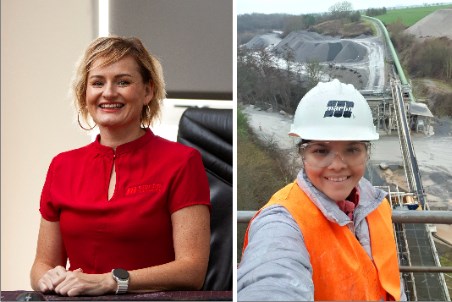
Women account for just 10 – 15% of the workforce in the global mining industry. And in certain regions and roles the proportion is even lower. However, this gender imbalance is gradually being addressed. Firms like bulk materials handling specialist Martin Engineering are fostering more inclusive workplaces and building more diverse leadership teams. Coinciding with International Day of Women in Mining, two leaders – Fran van der Berg in South Africa and Ashwini Khunte in India – offered their perspectives on how this transformation is unfolding.
Experience through exposure
Growing up in South Africa, Fran van der Berg’s route into mining was anything but typical, having studied consumer science at university. As General Manager for Martin’s Africa business unit, van der Berg oversees a team of more than 100 people and operations across sub-Saharan Africa.
“Joining Martin was a bit of a shock because after six months my manager left”, she recalls. “What I learned very quickly is that I'm good at managing crises!” Just a few years later, she was promoted to Head of Sales and Marketing for the EMEAI region (Europe, Middle East, Africa, and India) before returning to Africa as GM.
Across the globe in Pune, India, Ashwini Khunte’s path was more conventional – but a no less dynamic progression curve. “I’m a mechanical engineer by training and I started in Martin in 2013”, she says. “At that point we had a small close-knit team so I got lots of hand-on exposure, with huge scope to solve our customers’ material handling problems.”
When van der Berg took on Martin’s Africa GM role, Khunte stepped up to fill her shoes as Head of Sales and Marketing. “It’s been quite a steep learning curve”, she reflects. “Each phase has given me something different – technical grounding, customer exposure, and now strategic leadership.”
For both women, career progression has been characterised by their capacity and willingness to go beyond familiar territory. “Initially, talking to customers was far out of my comfort zone”, admits Khunte, “but that exposure gave me a good base.” And her technical background became a crucial advantage. Today, her role requires plotting sales strategy across vastly different markets. “In Europe, the market conditions are very different to India or Africa. So, although the solutions that deliver safety and productive material handling are the same, a completely different mindset is needed.” Van der Berg echoes the importance and benefits of broad exposure, particularly across diverse cultures. Her move into a regional EMEAI role before returning to Africa proved pivotal. “One of the big learnings for me was how to work with different people”, she says.
Gradual shifts and big breaks
While representation matters, both leaders emphasise that deeper change lies in reshaping workplace culture – particularly in traditionally hierarchical environments. Van der Berg’s approach challenges conventional norms by “actively listening to people, asking good questions, explaining why and how.” That shift is delivering results in business performance. “My attitude has always been: if you know deep down you’re doing the right thing, just keep on doing it, and eventually you’ll breakthrough”, she says.
In India, Khunte has been part of a similar cultural evolution. “Of course, we still have older ways of thinking in the Indian mining industry”, she says. “But we also have a very dynamic and vibrant young workforce”. With an average team age of around 30, Martin India’s focus with customers has been on bridging generational and cultural divides. “We are narrowing the gap between old and new ways of working”, she explains. “That’s really important if we want to achieve growth.”
Despite their progress, both women are candid about the challenges that persist in the industry. But van der Berg believes it is women themselves who often underestimate their own value. “We do have something, a lot, to bring to the performance of the business, and we don’t have to go into a ‘dominant male’ mode to achieve that.”
Instead, she highlights the strengths that women often contribute such as analytical thinking, attention to detail, relationships, and a reflective approach to problem-solving. “There is definitely a space for that in the mining industry, now more than ever”, she says. Yet the reality of walking into a male-dominated customer’s boardroom can be daunting.
Khunte relates to this. Confidence, she notes, builds over time but it requires conscious and concerted effort. “If I were to advise others, I’d say just be yourself, and try to sit at the table – literally and figuratively – not on the sidelines”, she says.
Challenge yourself, seize the day
Both leaders emphasise that career-defining moments often come unexpectedly – and that the readiness to seize them is key. “Sometimes it only takes one or two moments to pivot your whole career”, van der Berg notes. “Whether that’s something you initiate or an opportunity someone gives you.”
Their advice to women entering mining is both practical and empowering. Van der Berg encourages curiosity and self-awareness: “Be inquisitive… understand your power as a woman and what you can bring to an organisation.”
Khunte’s guidance centres on courage and adaptability: “Don’t be afraid. Challenge yourself for sure, go out of your comfort zone.” She firmly believes that growth lies beyond familiarity. “You won’t get exposure by sticking to where you are”, she concluded.
Whilst there has been progress, there is still far to go. Field roles such as service technicians remain male-dominated, and cultural barriers may persist in many regions. But momentum is building. Perhaps most importantly, the narrative is shifting – from one of underrepresentation to one of opportunity.
As van der Berg reflects: “Enjoy the ride through the ups and the downs, in each period there’s something to learn and rewards to be reaped.” Khunte agrees: “Be yourself, trust in your knowledge and past successes, and take your seat at that table.” More than any other time of year, on International Day for Women in Mining, those words serve not just as advice but as a call to action for an industry in transition.
Read the article online at: https://www.globalminingreview.com/special-reports/26052026/breaking-ground-gender-diversity-in-minings-supply-chain/
You might also like
Australasian Metals Limited secures option over highly prospective African Lithium projects
Australasian Metals Limited has announced that it has entered into a Binding Option Agreement with Firering Strategic Minerals plc to acquire majority interests in the highly-prospective Atex Lithium-Tantalum Project and the Alliance Lithium Project in Côte d'Ivoire.