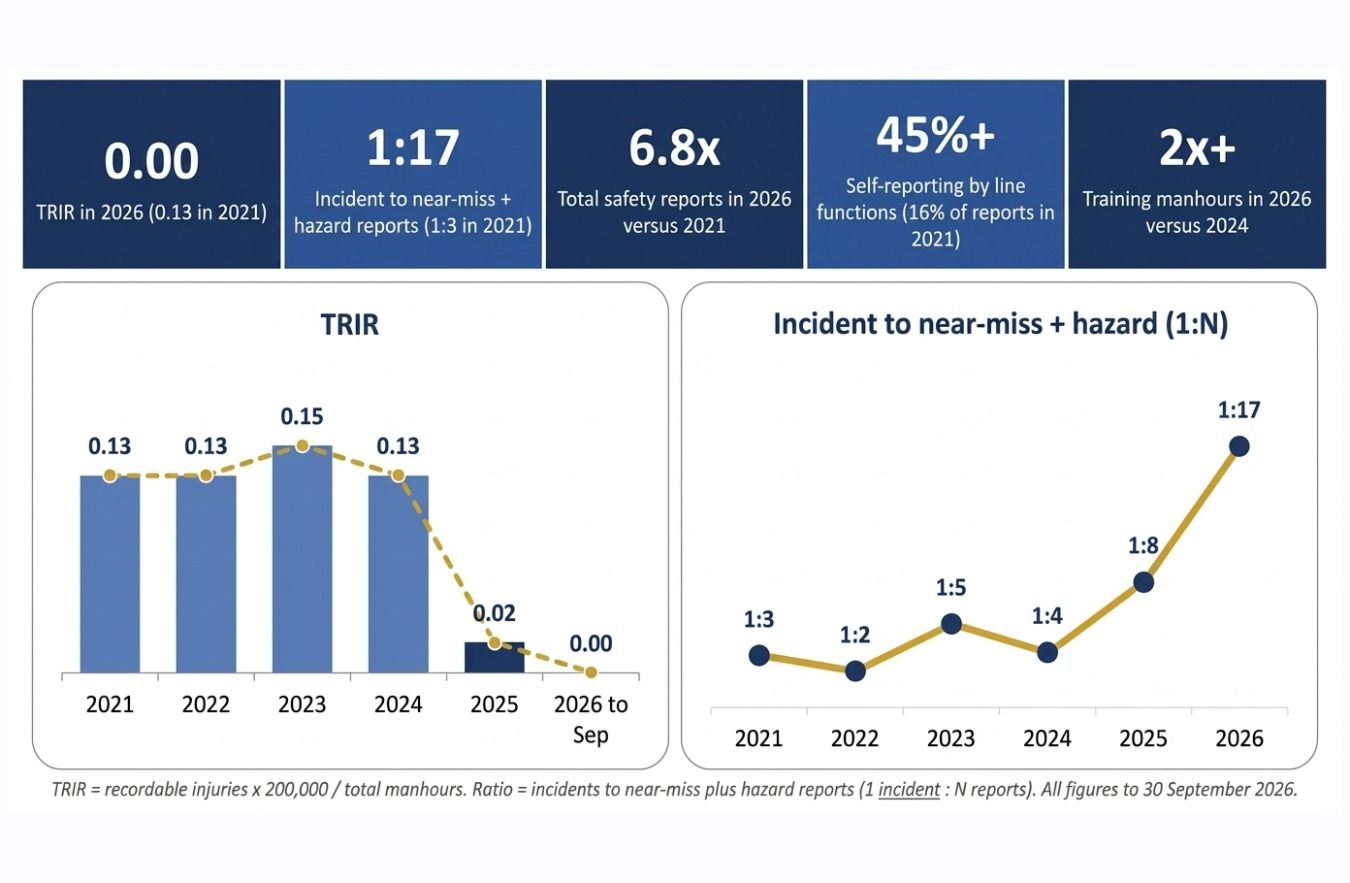
One of the most powerful safety controls on a mine is a person who feels safe enough to say: “this is not right”. At SECMC, one of Pakistan’s pioneering opencast lignite mines, this belief is embedded in everyday practices across the organisation. The results are reflected in the numbers: no recordable injury has been reported since 24 April 2025, TRIR has remained at 0.00 in 2026, and near-miss and hazard reporting has reached nearly seven times the 2021 volume. Self-reporting by line functions has risen from 16% to more than 45% of all reports.
Psychological safety: From silence to signal
Psychological safety is the confidence to raise a concern, ask a question or admit a mistake without fear of blame. On a mine it is a frontline control: a hazard that is noticed but not spoken about is still a hazard. SECMC builds it through direct interaction, with leaders and employees in the same room, concerns heard, and action taken:
Open Circle – A journey of psychological safety: to embed psychological safety across the organisation, SECMC introduced Open Circle as a structured learning journey rather than a one-off workshop. It combines two in-person sessions (introduction and systems integration), virtual sessions on power, leadership, and psychological safety.
What people practise – A five-part playbook is introduced for employees at all levels: communicating courageously, listening truly, managing reactions, embracing risk and failure, and designing inclusive rituals so that everyone is given a voice
Rooted in SECMC’s values of Truth, Trust, Humility, Integrity, and Sabr, the programme also helps teams distinguish between basic, complex, and intelligent failures, turning mistakes and near misses into opportunities for learning.
Town Halls, Doughnut Sessions, and Focused Group Discussions: create direct dialogue between employees and leaders, allowing concerns to be raised and translated into improvements. Visible field leadership further enables early engagement with frontline teams and emerging risks.
Trust is reflected in what people do. Self-reporting by line functions grew from 16% of all reports in 2021 to more than 45% in 2026, and for every incident people now raise about 17 near-miss and hazard reports, up from 3 in 2021. More reporting, and TRIR down to zero: people are speaking up, and risks are being raised before they become injuries.
Competence building: Capable people act with confidence
People speak up and act with confidence when their work is well understood. At SECMC, that competence is built and verified systematically:
Functional competence training: Each employee’s training is based on an individual Training Needs Analysis (TNA), so development matches the role and gaps are addressed openly as part of growth.
Competence verification: a system that verifies competence rather than assuming it.
Structured technical training: a structured system, established over the past few years, for Graduate Trainee Engineers, new joiners, and employees transferring between roles, with training KPIs to measure delivery.
Alumni sessions (2026): SECMC alumni return to share their experience on technical topics, strengthening technical and functional competencies.
D-Level: None of the week goes blank, but its D-Level, every Tuesday, including more than 2000 workers, comes together in different groups to talk about safety, their concerns, lessons learned, etc. It is the weekly rhythm that keeps speaking up routine.
Technology that carries the risk, not the people
Technology reinforces the same goal as psychological safety and competence: reducing people’s exposure to risk and manual effort while providing objective information to make better, safer decisions. The most important contributors are:
Geotechnical Radar: Monitors slope movement 24/7, enabling early detection and timely intervention. Zero ground-failure incidents were recorded during the reporting period.
3D Laser West Wall Scanning and Fixed-Wing Drone Surveying: On-demand surface models replace monthly third-party surveys that previously required two to three days of processing, reducing manual survey effort.
Centralised Control Room: Consolidates live operational information to support faster, better-informed decisions.
AI-Enabled Safety Monitoring and Digital Risk Management: AI Safety Monitoring Cameras and AI Fatigue and Driver Management identify unsafe conditions, high-risk behaviours, and fatigue in real time. SafeBot provides instant access to safety procedures and operational information, while Digital Critical Risk Management strengthens the monitoring and management of controls for high-risk activities.
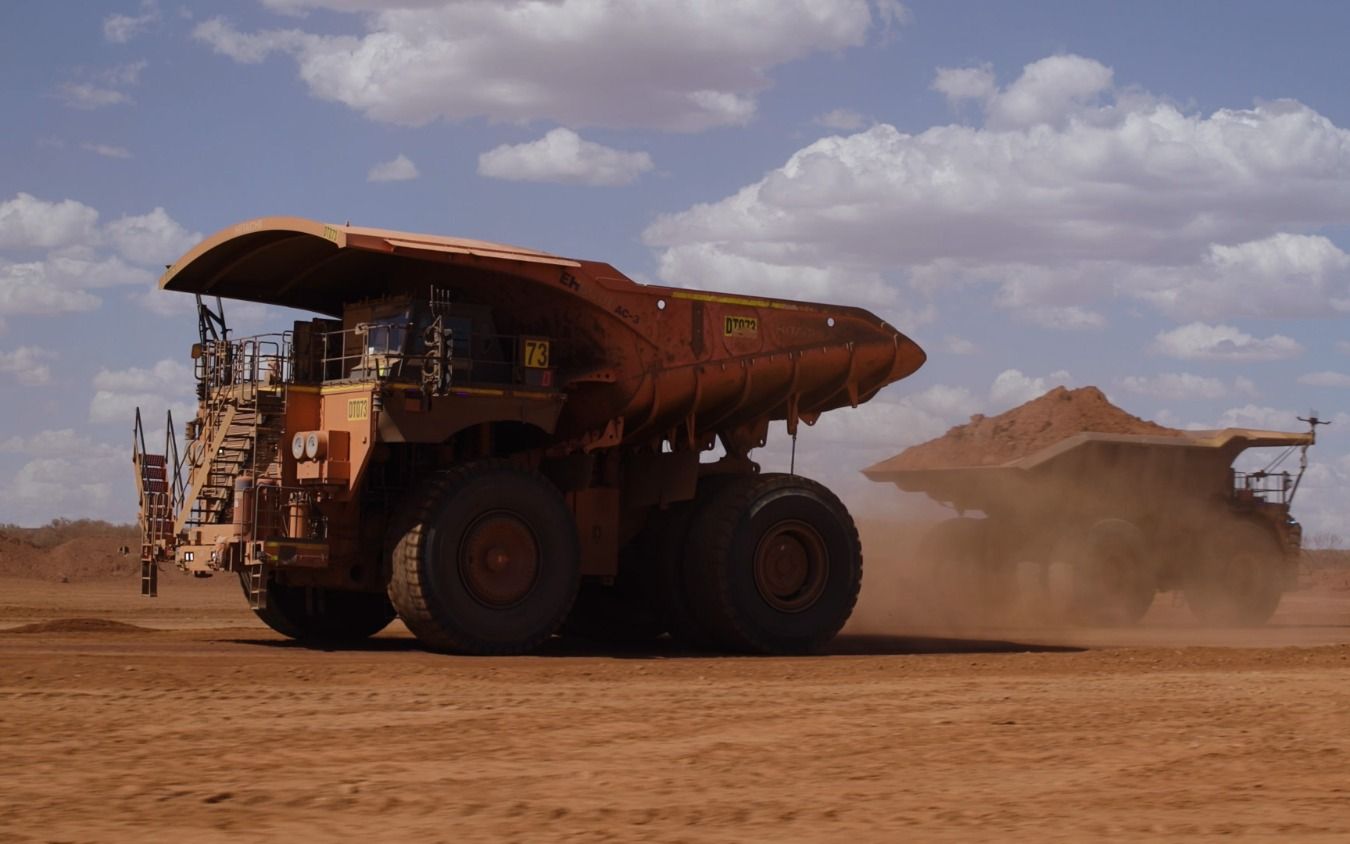
TIMS, K-PEX, KOMTRAX, and Truck Volumetric Measurement: Real-time visibility of haul trucks, material movement and equipment utilisation is provided, speeding up fleet decisions and reducing manual tracking.
APEX: SECMC’s upcoming Asset Performance initiative, through which this data-driven approach will be extended to mine assets.
Conclusion
Confidence to speak up is built through psychological safety; competence ensures people know what must be done; and technology helps risks be identified earlier. Together, these elements are shaping a mining environment where hazards are identified before they result in harm, and where SECMC has surpassed 500+ days without a recordable injury.
The numbers are the evidence; the culture is the achievement. SECMC ambition is to make safety second nature, so that every person returns home safe and well, every day.