
Safely clearing silo, hopper, and chute blockages
Published by Jody Dodgson,
Editorial Assistant
Global Mining Review,
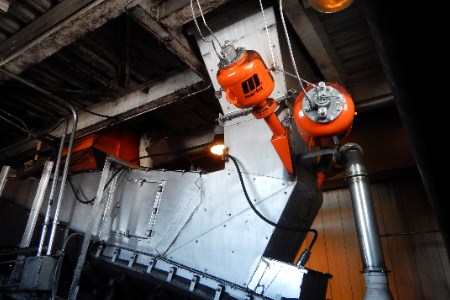
The signs of a clogged silo, hopper, or chute are obvious. Nothing is discharging from the spout. Material is compacted, or there is spillage from either overflow or conveyor backup. When production stops, workers get creative, hitting the side of the vessel with tools or strapping on a harness to go inside, both creating safety hazards. In response, air cannons have become a viable alternative across bulk handling sectors, offering greater safety, less labour, and significantly reducing downtime.
Martin® Air Cannons clear and prevent clogs to promote material flow. The first step is to understand how, where, when, and why clogs occur. The second step is to remove worker involvement in clearing the clog. The third step is to monitor the flow aid system to maximise efficiency.
Why do silos, hoppers, and chutes clog?
- Weather – Humidity and temperature affect how the material flows and builds up.
- Material weight/size/shape – Gravity is both friend and foe to bulk flow. With materials of variable shapes and sizes and different flow rates/characteristics, obstructions happen.
- Structural design – Choosing a square or round vessel for optimal flow is based on the material characteristics. Material Flow Analysis software helps in modelling flow.
- Load speed/volume/distribution – Speed and volume should not exceed the vessel’s specifications, or clogs will occur. To avoid buildup and eccentric load stress, discharge distribution should match the geometry of the vessel.
Unsafe practices for silo, hopper, and chute clearing
Once a clog has been detected, there are several unsafe practices that, at the time, may seem harmless but frequently cause serious worker injuries or fatalities year after year.
- Beating the vessel walls with objects to loosen adhered material creates bumps and ridges on the wall, forming ledges that promote greater accumulation. This solution also puts workers near the spout, exposing them to sudden surges.
- Poking or lancing underneath the clog at the discharge point causes a surge of material, burying or crushing the worker(s) below.
- Confined space entry is a major cause of worker injuries and fatalities when clearing obstructions. Bridging material could pull the worker into the cavity. Material buildup on the sides of the vessel could release from above, resulting in serious injury or burial.
How do air cannons work?
Martin Air Cannons use the site’s compressed air to deliver a powerful blast that aerates material and dislodges buildup. The basic components include an air reservoir, a fast-acting valve with a trigger mechanism, and a nozzle that distributes the air in the desired pattern to clear the accumulation most effectively. Often installed in a series and precisely sequenced for maximum effect, the network can be timed to best suit individual process conditions or material characteristics.
With outward-facing valves for easy maintenance, the cannons connect to a solenoid box up to 61m (200 ft) away for safety and easy access. This allows them to be linked to and activated from a centralized logistical system or fired manually from the solenoid.
Bulk material flow technology
The N2® Air Cannon Intelligence (ACI) System gives bulk handlers unprecedented insight into air cannon performance, enabling entire installations to optimise throughput. It provides operators access to continuous monitoring and detailed analytics through a secure web-based dashboard and mobile interface. Fitted to each air cannon on a plant, the N2® ACI sensor measures firing characteristics, helping operators monitor, identify, and diagnose problems. Early identification shifts maintenance staff activities to prevention rather than reaction, saving unscheduled downtime. Remote monitoring reduces labour for inspection, lowering operating costs.
Improving safety and production
Martin Air Cannons and the N2 ACI System have helped cement plants, ports/terminals, mines, quarries, agriculture, and recyclers mitigate blockages and improve production at silos, hoppers, and chutes. By installing a modern air cannon network, bulk handlers can improve safety, reduce downtime, and lower the cost of operation.
Read the article online at: https://www.globalminingreview.com/mining/20082026/safely-clearing-silo-hopper-and-chute-blockages/
You might also like


Critical minerals: Africa wants to process, China builds
Louise Margolin, Deputy Editor-in-Chief at Africa Business+ and Mining Editor at Jeune Afrique, and Ousmane Diawara, Partner Mining & Infrastructure at EY, explain how Africa is increasing its mineral processing capacity, with support from China.