Companies working in the mining, mineral processing and aggregate industries operate in some of the most difficult environments to contain dust. Operators in these industries might place dust collection technologies at their sites, but once those products are placed, they are often not revisited or properly maintained for operational efficiency.
If your dust collection technologies have not been expertly sized, balanced and maintained, your business may face several long-term issues including equipment wear, production downtime and decreased worker health and safety.
There are three critical consequences operators will inevitably face if they don’t invest in the appropriately engineered dust control technologies.
Equipment performance
The most apparent issue operators will deal with is equipment that breaks down quicker than anticipated. As dust builds up, it accelerates wear and tear to fans, collector body and electrical systems, leading to more frequent maintenance. Increased downtime and reduced equipment availability means production rates decrease.
Poorly managed and high-dust environments can experience an increase in downtime, which can lead to tens of thousands of dollars in financial losses.
Worker health and safety
Perhaps less apparent immediately, but critical to consider, is the health and safety of workers. An unclean and dusty work environment decreases the overall happiness of workers and increases their risk of injury and illness.
In the short term, dust buildup increases the risk of slips and falls and drastically reduces visibility at a job site, increasing the risk of other serious accidents.
In the long term, large amounts of airborne dust and materials can contribute to COPD and other serious respiratory diseases. Workers exposed to large amounts of silica dust in the air could eventually suffer from silicosis.
Regulatory compliance
Along with managing equipment and workers, operators must keep track of tightening environmental and safety regulations. Although MSHA continues to pause enforcement of its new silica rule in the US, this is expected to change soon. The EPA’s PM10 standards also directly impact air quality and the allowable concentration of particulate matter at a given site.
If you’re not actively working to capture dust at the source, your business will likely contend with fines, the possibility of permit restrictions and shutdowns. Lack of attention here impacts the reputation of your business and, in worst case scenarios, legal action.
Capturing dust at the source
Despite operators having numerous competing interests, the good news is there are several steps to take now to start optimising your dust collection process. This doesn’t always require a full system replacement. Incremental upgrades, such as adjusting hood designs and locations, adding enclosures to the equipment, addressing air leaks and other improvements for balancing airflow are good first steps
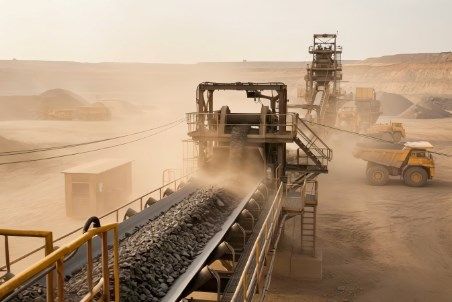
Implementing dry dust collection technologies, where appropriate, can boost dust collection efficiency when properly designed, and entire systems are typically easy to set up and integrate with existing conveyor technologies. Belt Conveyor Transfer Point Dust Collectors, when paired with the appropriate conveyor sealing and containment, can capture particles as small as 0.5 microns at mining sites.
Fugitive dust isn’t just an environmental nuisance – it’s an operational risk. Poor dust control can reduce productivity, increase costs, shorten asset life, and create safety and compliance issues. Effective dust management is essential for efficient and sustainable mining operations.
Author note
Steve Cook, Mining, Aggregates & Cement Manager, C&W DustTech