
Copper’s structural deficit has returned, but this time it’s different
Published by Will Owen,
Editor
Global Mining Review,
Sam Hosack, Managing Director at Prospect Resources Ltd, considers how global demand for electrification, AI, infrastructure and defence is accelerating, while copper supply is struggling to keep pace, resulting in rising competition to meet future production needs.
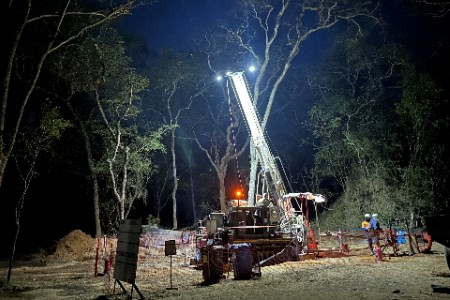
The last time the copper market was considered to be in a structural deficit was in 2009. More than 15 years later, the market is again facing a supply shortfall, but the factors driving it today are more significant, more strategic, and likely to be longer lasting.
Much of the attention surrounding copper is focused on demand. Electrification, renewable energy infrastructure, EVs, battery storage, data centres, and grid expansion are expected to drive significant growth in copper consumption over coming decades. While these demand trends are well understood, they are only part of the story. The bigger challenge is supply.
The world is not short of copper resources. It is increasingly short of projects that can realistically be financed, permitted, developed, and brought into production quickly enough to meet future demand.
Recent data from S&P Global highlights the issue. Only 14 major copper discoveries have been made during the past decade, accounting for just 3.5% of all copper discovered since 1990.
Despite stronger copper prices and growing exploration budgets, major discoveries are becoming less frequent and smaller in scale. Much of the industry’s resource growth is now coming from expanding known deposits, rather than identifying new ones.
At the same time, grassroots exploration has fallen to historically low levels as companies focus increasingly on brownfields exploration around existing operations. While this strategy may support near-term resource growth, it does little to replenish the pipeline of future development projects.
Time is also working against the industry.
S&P Global estimates the average period from discovery to production is approximately 16 years, meaning exploration success today may not translate into new supply until well into the next decade. As discoveries become rarer and development timelines lengthen, the industry’s ability to respond to growing demand becomes increasingly constrained.
Financial institutions are beginning to reach the same conclusion. UBS recently raised its copper price forecasts and now expects prices to reach US$15 000/t by early 2027, while forecasting a market deficit of more than 500 000 t in 2026.
Despite strong demand fundamentals, the dominant factor increasingly influencing the copper market is supply.
Importantly, resource size alone does not guarantee future production. Large deposits can face significant challenges including infrastructure requirements, metallurgical complexity, financing hurdles, permitting delays, and long development timelines. Conversely, smaller and more advanced projects with a clear pathway to development can create substantial value more quickly.
This is where investors are increasingly shifting their focus. Rather than simply evaluating resource size, the market is placing greater emphasis on project quality, development certainty, capital intensity, infrastructure access, and jurisdictional risk.
For exploration companies with a history of value creation, this presents a compelling opportunity.
Prospect Resources is rapidly advancing its Mumbezhi Copper Project in Zambia’s world-class Copperbelt, one of the most productive copper regions globally.
Located alongside major industry participants including First Quantum Minerals and Barrick Mining Corporation, Mumbezhi is in a proven mining district with the scale, infrastructure access and regional context needed to support future development.
The company also updated its Mineral Resource Estimate twice in the past year, reflecting the success of ongoing exploration and growing scale of the project.
As most forecasts point to sustained long-term copper demand from the energy transition, electrification and expanding digital infrastructure, projects such as Mumbezhi are becoming increasingly important to the future supply equation.
The return of a structural copper deficit is a reminder that future supply won’t be solved by demand forecasts alone. It will depend on the industry’s ability to convert quality resources into producing assets.
In this environment, development confidence may prove just as important as resource scale.
Read the article online at: https://www.globalminingreview.com/mining/17062026/coppers-structural-deficit-has-returned-but-this-time-its-different/
You might also like

USA Rare Earth, Pasqal, and Riven Systems partner to advance next-generation technologies for critical mineral production
USA Rare Earth, a rare earth, critical minerals and advanced materials company, Pasqal, a global leader in neutral-atom quantum computing and Riven Systems, a specialist in AI for industrial chemistry, have announced a strategic partnership to develop next-generation separation technology for the rare earth value chain.