German-Chilean networking platform ‘PaNaBat’ launched
Published by Will Owen,
Editor
Global Mining Review,
Lithium has become an indispensable part of our daily lives, however its extraction faces criticism because it harms the environment and local livelihoods. New technologies could bring about a decisive breakthrough. This is where the new German-Chilean research project ‘PaNaBat’ comes in.
PaNaBat aims to establish a long-term German-Chilean networking platform that promotes research collaboration, education, technology transfer, and industrial cooperation in sustainable battery raw materials, lithium extraction, and battery recycling. In addition, the project contributes to the diversification and regionalisation of supply chains, thereby supporting a broader international presence in the export of lithium and other critical raw materials for battery cell production.
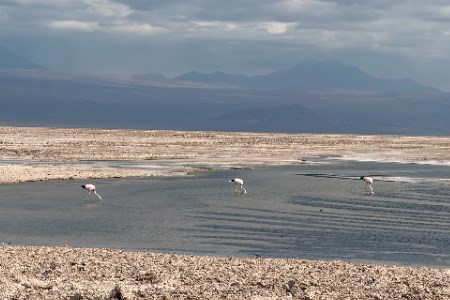
Materials research and process development play a central role in the sustainable use of lithium in battery production. Lithium is one of the most important raw materials for the battery industry and electric mobility. More than 50% of the world’s lithium reserves are located in Latin America, mainly in the lithium triangle of Chile, Bolivia, and Argentina. Extraction currently takes place primarily in Chile’s Atacama Desert using large evaporation ponds. This process may lead to significant water losses and can have important environmental impacts, particularly in sensitive ecosystems and areas where water resources are also relevant for local communities and agricultural activities.
Against this backdrop, new, more sustainable, and more efficient technologies are becoming increasingly important. Innovative approaches such as direct lithium extraction (DLE) and closed-loop evaporation processes are being researched, for example, by the Universidad Católica del Norte in Chile and various Fraunhofer Institutes in Europe. To address the environmental challenges associated with increasing production, process-ecological analyses adapted to local conditions are also necessary.
The international cooperation project PaNaBat aims to establish close German-Chilean collaboration in research and development for the resource- and energy-efficient extraction of lithium. The goal is to lay foundation for a sustainable circular economy in the European battery market. Participants include Universidad Católica del Norte in Chile, through its Lithium I+D+i Center (Investigación + Desarrollo + Innovación), and Fraunhofer Chile, as well as the German Fraunhofer Institutes for Thin Film and Surface Technology IST, for Solar Energy Systems ISE, and for Silicate Research ISC. Fraunhofer ISC is also responsible for project coordination.
A key element of PaNaBat is the creation of an information and networking platform that connects cooperation partners, companies, and research institutions. Initial pilot projects are already being launched during the setup phase to test and further develop the platform and its organisational structure. Later, additional projects with external partners will be initiated to strengthen exchange and collaboration.
The project is also of great economic significance. Securing sustainable sources of lithium and developing modern recycling processes strengthen independence from raw materials and enhance competitiveness. At the same time, Chilean companies and research institutions benefit from the collaboration by gaining access to new technologies and international markets.
In addition, PaNaBat is working to develop a sustainable circular economy for battery materials such as lithium, cobalt, nickel, and aluminium. The focus is on advanced recycling processes with closed-loop material cycles and a low CO2 footprint, as well as automated battery disassembly, new sorting technologies, and efficient processing methods. The goal is to recover the materials not in their elemental form but in a way that preserves their functionality, so they can be directly reused in battery production. The strategic partnership with Chile is of particular importance in this context, especially if process chemicals such as lithium hydroxide or lithium carbonate can be produced using more sustainable new methods such as DLE. Equally important are the transfer of expertise and the adaptation of process steps from the mining and processing industries for use in battery recycling.
Another key issue is the assessment of environmental impacts of new technologies. The integration of life cycle analysis (LCA) and life cycle engineering (LCE) into the development of new products and processes using the concept of Integrated Computational Life Cycle Engineering (ICLCE) enables the optimisation of production processes in an early development phase. This allows robust and sustainable solutions to be transferred to industrial application more quickly.
PaNaBat is supported by an industry advisory board comprising German and Chilean companies, primarily small and medium-sized enterprises, which will actively contribute to the project’s implementation as it progresses. This creates a network of research and industry for international collaboration that develops concrete solutions for more sustainable battery production – to the benefit of the economy, society, and the environment in Europe and Chile.
Read the article online at: https://www.globalminingreview.com/handling-processing/30072026/german-chilean-networking-platform-panabat-launched/
You might also like
The Global Mining Review Podcast
A podcast series for professionals in the mining industry featuring short, insightful interviews. Subscribe on your favourite podcast app to start listening today.