As modern mining operations push the envelope on mineral processing plant throughputs by maximising production, often beyond original design capacity, there is growing demand for alternatives to conventional open launder systems for mineral slurry transport. Multotec’s modular, enclosed pipe launders are designed for modern high-throughput applications, helping to prevent product losses, reduce downtime, and enhance overall plant performance.
In gravity concentrator circuits for heavy mineral processing, efficient collection and transfer of product streams are essential for plant performance. Conventional open launders made from rubber-lined steel are heavy, labour-intensive to install and maintain, prone to corrosion and the delamination of rubber liners over time.
While High-Density Polyethylene (HDPE) offers excellent corrosion resistance, it can be susceptible to deformation under certain operating conditions, particularly where elevated temperatures, unsupported spans or high mechanical loads are present, leading to malfunctions that could cause injury, downtime, and high maintenance costs.
Intentionally designed and built to last
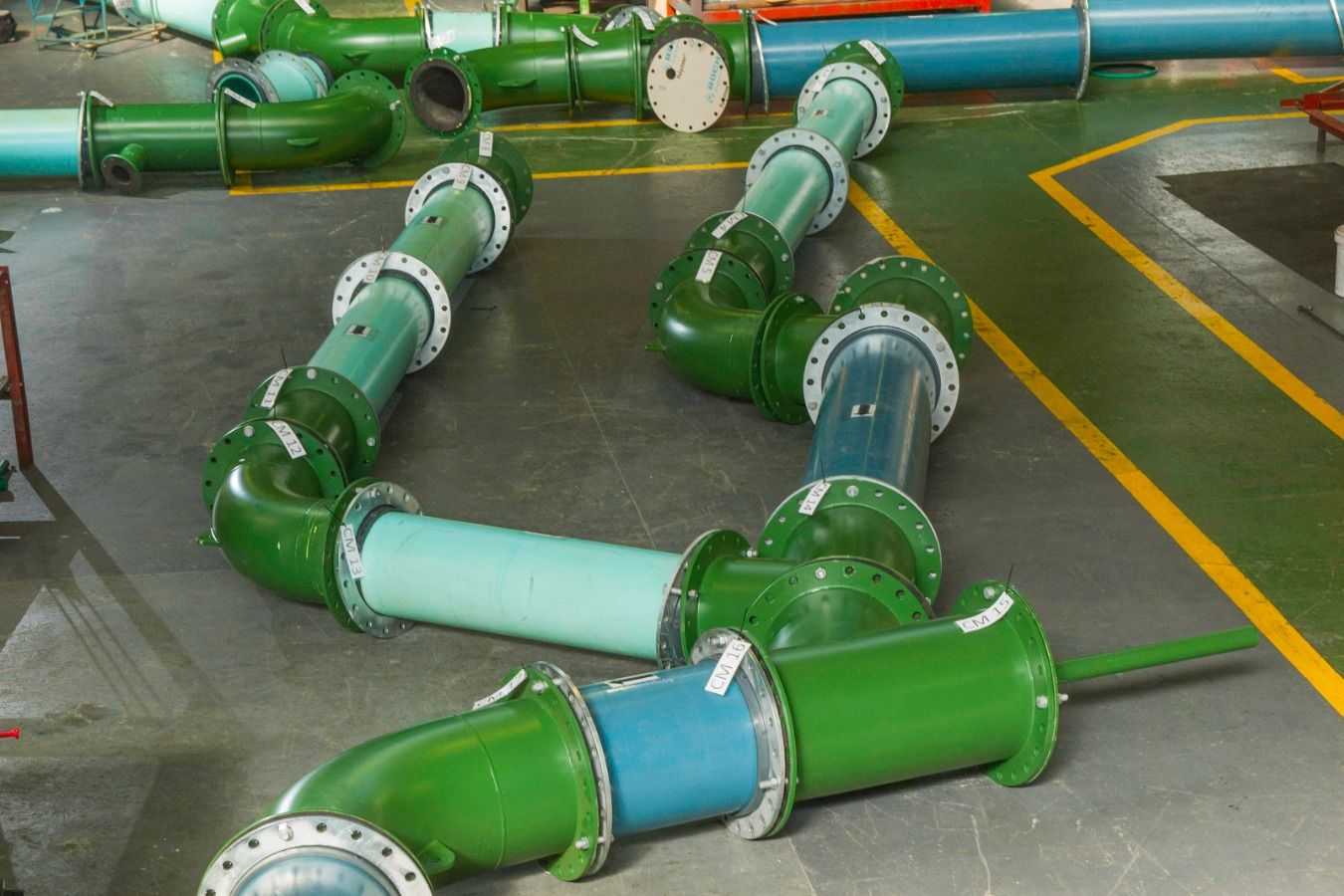
Multotec’s pipe launders, made from unplasticised Polyvinyl Chloride (uPVC) and lined with Polyurethane (PU), are lighter, easier to install, corrosion-resistant, and highly abrasion-resistant in high-wear environments.
“These features improve the overall operational longevity of the launder system. They enhance uptime by reducing operational disruptions caused by breakdowns and unplanned maintenance, improve safety within the process plant by containing spillages and splashes, and reduce the total cost of ownership through easier, less frequent, and planned maintenance,” says Menzi Xulu, Senior Process & Applications Engineer at Multotec.
Xulu notes that declining ore grades require higher plant throughputs to sustain recovery rates, and Multotec’s pipe launder systems are designed to accommodate these increasing demands.
“From a design perspective, launder pipe diameters are carefully determined and optimised according to slurry flow rates and slurry characteristics to prevent settling and blockages. The structured hydraulic design of the launder also ensures stable slurry flow, while the materials of construction combine the corrosion-resistance of uPVC with the wear performance of PU, significantly extending wear life compared with conventional rubber-lined steel launders,” Xulu explains.
“Within the launder system, slurry transport occurs entirely by gravity flow, eliminating the need for additional pumping between transfer points, making correct slope, angle, and velocity optimisation critical to maintaining stable slurry transport and preventing cycling or blockages,” Xulu adds.
Modularity enables easy installation and targeted maintenance
Xulu says that pipe launders have been intentionally designed and configured to be modular.
“The use of flanged pipe joints and replaceable components, such as the PU boot, allows for straightforward maintenance and targeted wear-part replacement without the need to dismantle the entire pipe assembly,” Xulu explains.
Moreover, the modular configuration improves installation efficiency, making it suitable for sites with smaller or tightly spaced plant footprints, as well as for retrofitting into brownfield gravity concentration plants where installation time must be minimised to reduce downtime.
The flanged design also allows operators to replace only affected sections of the system instead of removing the full pipeline assembly, further improving maintenance efficiency, and reducing operational interruptions.
Locally designed yet internationally relevant
Multotec’s PU-lined uPVC pipe launders were first adopted in South Africa’s mineral sands sector over 25 years ago and have since expanded into chrome spiral plants, where slurry densities, solids concentrations and abrasive wear conditions are typically more severe.
The systems have also been applied in iron ore concentration plants, where wear, corrosion, or layout complexity is a concern, as well as in coal plants and regional mineral sands operations, where they have proven effective in handling high-tonnage abrasive slurries, while reducing spillage, improving maintenance accessibility and creating safer walkways and cleaner working environments.
Multotec has built extensive engineering experience through local and regional gravity separation plant installations, developing strong insight into slurry behavior in gravity circuits.
“This expertise, combined with the system’s modular design, supports Multotec’s expansion and export of its pipe launder systems to international markets through quick on-site assembly, simple installation and suitability across a broader range of commodities,” Xulu concludes.