
Why Greenland anorthosite matters today
Published by Jody Dodgson,
Editorial Assistant
Global Mining Review,
Q: What exactly is anorthosite and what makes it valuable?
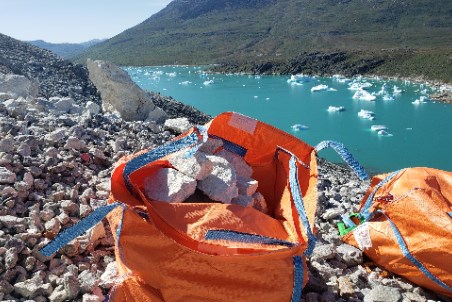
A: Anorthosite is a rare rock composed primarily of calcium-rich aluminium silicate feldspar. High-quality, low-impurity deposits suitable for industrial use are found in only a few places worldwide – including Greenland, Norway, and Finland. Unlike most sodium-rich feldspars, its calcium-rich composition reacts efficiently in aluminium and cement processes, making it well-suited to these applications.
The anorthosite at AnorTech’s Grønne Berg project in Greenland contains a high percentage of aluminium oxide at 32%, which is readily leached from the rock using hydrochloric acid. It has very low iron content (1% or less) and few undesirable elements. The ore body is also remarkable for its uniformity and purity, which greatly reduces processing variability – a critical factor for industrial applications.
With aluminium designated as a critical metal in the US, the EU, and Canada, anorthosite from Greenland represents a sustainable and secure feed material for alumina and aluminium production.
Q: AnorTech’s proprietary technology produces waste-free alumina and other industrial materials from anorthosite. Where do these products fit into industrial value chains?
A: Our products can enter industrial value chains at multiple points, depending on the application. We can supply aluminium trihydrate (ATH), which is used in water purification and fire-retardant applications, and smelter-grade alumina for primary aluminium production. Smelter-grade alumina provides a more sustainable feedstock than bauxite-derived alumina and eliminates red-mud waste entirely. Further refining produces high-value, high-purity alumina with 99.99% aluminium oxide, which can be used in LEDs, semiconductors, lithium-ion batteries, advanced ceramics, and high-performance electronics.
Beyond aluminium, anorthosite can be used to make a CO2-free refractory cement product. We can supply aggregate directly to cement producers or manufacture proprietary refractory cement products ourselves. For the E-glass industry, an additional milling and magnetic separation step produces a highly desirable feed material for major manufacturers. E-glass is a critical input for rapidly growing sectors such as wind energy, advanced construction materials, and automotive lightweighting (reducing vehicle weight while maintaining or improving performance).
Across these applications, anorthosite provides industries with cleaner, lower-waste inputs without requiring changes to existing production infrastructure.
Q: What advantages does the anorthosite from Grønne Berg bring to these applications?
A: Our Grønne Berg project offers a simpler, cleaner, and long-life resource for several industries. The rock is mined directly from the surface, so no overburden removal is required, significantly reducing land disturbance. Its composition makes it easy to process, and our process produces no tailings – unlike bauxite refining. It also yields two valuable co-products, calcium silicate and amorphous silica, used in construction materials, industrial fillers, and specialty applications.
Location is another significant advantage. Grønne Berg is close to major northern manufacturing centres, reducing shipping distances, emissions, and dependence on long supply routes from the southern hemisphere. The project has year-round deep-water access to open tidewater and is close to the capital, Nuuk, which means there is a stable workforce. Grønne Bjerg is also located only 30 km from one of Greenland’s most promising hydroelectric sites, which could provide clean power.
Together, these factors, along with our ability to get new mines approved and built in Greenland, positions Grønne Berg as a stable northern supply point for industrial producers seeking to diversify sourcing and reduce risk.
Q: Why is anorthosite relevant now for industrial producers and countries?
A: Anorthosite is particularly relevant now as producers and countries rethink how they source critical materials. Supply chains are under pressure, and many industries are seeking options closer to their markets with lower political and logistical risk. In this context, the Grønne Berg project is compelling, as it is closer to a large portion of the aluminium market, offering a shorter and more predictable supply chain.
Greenland’s regulatory environment further strengthens its appeal. As a mining-friendly jurisdiction operating under Greenlandic and EU legal frameworks, it offers a clear, streamlined, and stable pathway for obtaining an exploitation permit. Mineral rights are administered directly by Greenlandic authorities, providing transparency and predictability for long-term investment.
This combination of cleaner processing, shorter supply routes, and geopolitical stability is increasingly important as industries work to reduce dependencies and strengthen supply-chain resilience. In this context, anorthosite is increasingly recognised as a timely alternative to conventional raw materials across multiple industries.
Read the article online at: https://www.globalminingreview.com/mining/05012026/why-greenland-anorthosite-matters-today/
You might also like
Wheaton Precious Metals acquires silver stream from Antamina through new partnership with BHP
Wheaton Precious Metals International has entered into a definitive precious metals purchase agreement with a subsidiary of BHP for its portion of the silver produced at the Antamina Mine.