Ensuring worker safety is always top priority in manufacturing, but in the mining industry, safety takes on a whole new meaning. Safe working conditions can mean the difference between life and death for these employees.
Unfortunately, the latest figures don’t paint the most promising picture of mining safety, with mining-related fatalities up 27% in 2025 vs. 2024 due to various incidents, according to the Mine Safety & Health Administration (MSHA).
All eyes are on safety, and ensuring businesses transition from approaching it as a standard-compliance consideration to a foundational component and operational backbone. Safety is no longer treated as a standalone objective but as a direct outcome of electrification, automation, and system integration.
Embedding safety into every part of mining operations, from equipment to power infrastructure and data systems, enables businesses to focus on driving efficiency and productivity while mitigating costly delays and risks arising from unsafe conditions. And in the current climate, filled with economic uncertainties and labour shortages, working with smarter, reliable technology can directly impact operational safety and productivity. Let’s explore how safety is reshaping the mining industry from the ground up.
Safety’s expansion through the mining supply chain
In today’s modern mining landscape, safety expectations are expanding beyond mining pits and making its way down the supply chain. This is largely due to the industry mindset that risks are everywhere, even at off-site offices.
As required by MSHA protocols, mandatory safety training is required to set foot on any mining site. However, OEMs and suppliers are being asked to demonstrate their own safety protocols and the steps their teams are taking to maintain safety, even if from a distance.
This is increasingly important as teams determine how to implement automated processes to reduce manual risks and support off-site controls. With safety becoming a shared expectation across the mining supply chain, partners and operators are exploring new technologies and innovations to prevent the conversation of what they could have done earlier to mitigate risk.
Engineering safety into modern mining
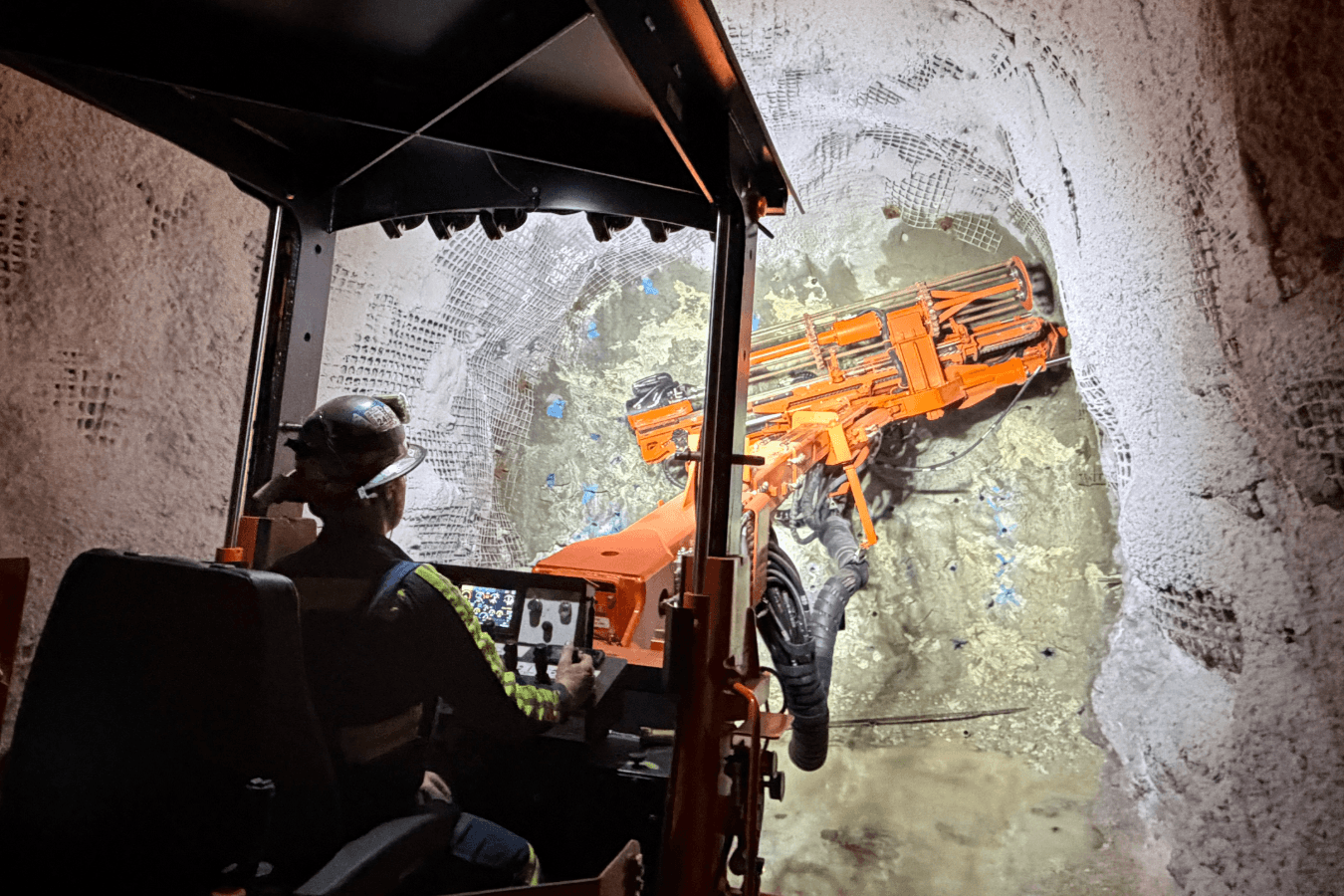
The CDC’s National Institute for Occupational Safety and Health (NIOSH) reported that over 40% of mining injuries involve being struck by or caught in machinery and powered haulage equipment. To reduce this percentage, OEMs and suppliers are seeking to integrate safety into mining infrastructure design. By engineering out exposure and reducing manual tasks, operators are less likely to encounter risk-inducing machinery and processes.
One key risk area is operating large electrically powered mobile equipment that is inherently tethered via trailing cables, a standard configuration across most mining operations. While plug-in connections may vary, the presence of trailing power cables is constant. This opens the door to multiple hazard scenarios, including encountering exposed conductors resulting from damaged cables, driving over or cutting loose cables, or repositioning cables to make room for moving equipment. Operators who constantly move large electric equipment are in close proximity to high-voltage cables and active machinery, amplifying the risk of incidents and costly machinery repairs.
By introducing automated and assisted cable management into mining operations, cables are properly stored on a cable reel or drum, eliminating manual intervention and reducing the risk of injury to operators and employees. Slips, trips, and falls caused by loose cables are reduced, costly machinery damage is avoided, and operations continue moving forward.
Relying on data-driven technology
For some larger mining sites, implementing universal cabling can increase costs. In response, sites will shift toward wireless operations to reduce spending and simplify operations. However, this can also lead to potential connection drops or experience interference due to harsh mining conditions. When data or control signals do not properly reach the right control centres or systems, employee and machine safety are at risk.
Alternative options to consider include integrating wired data paths into machines that support radio connections and prevent interference. Data is successfully transmitted through the wired connection, supporting productivity and informing operational decisions. This wired path, paired with automated cable reels, also supports continued safety for all employees.
Using hardwired data systems can reduce the need for manual intervention, allowing facilities to rely on remote controls to transfer signals. From there, they can manage and control machines from a safe distance, without the risk of injury-related incidents. This supports the industry’s growing trend and long-term vision to remove employees from hazardous working conditions by relying on automated, remote equipment.
Safer operations for all
Facility managers and OEMs know the risks that mining environments pose to their operators and staff. The safest mining operations will be those that systematically remove people from high-risk environments through electrification, automation, and intelligent system design. Taking an automated systems approach, backed by reliable, data-driven technology, can help reduce the risk of detrimental incidents. Not to mention, costly maintenance delays and system downtime. By engineering out exposure through increased distance, automation, and assisted handling, safety is enhanced and operations can continue. Power delivery and data-backed enhancements will help shape the next era of mining safety, keeping people out of harm’s way and future-proofing mining operations.
Ernesto’s Bio
Ernesto Heller is Market Development Manager for Mining & Bulk Materials Handling at Conductix-Wampfler, a leader in the industrial electrification industry. Ernesto plays a pivotal role in driving growth in the mining sector, helping customers modernise their facilities with innovative technologies that enhance efficiency and safety.